HEDWIGE
In HEDWIGE, agriculture, nature and industry meet. The Hertogin Hedwigepolder and Propsperpolder at the Belgian-Dutch border was turned into ‘new nature’ in 2022. Local farmers had been protesting the deliberate flooding of a century-old polder landscape since the early 2000s. To no avail. The site was turned into the salt marsh it had been not that long ago, but this time created by excavators.
The conflict between farmers and nature conservationists was the outcome of industrial growth across the border nearby. In the port of Antwerp, industrial activities and global trade had expanded tremendously. The newly created salt marsh was a controversial EU-policy exchange for this industrial growth. Yet, the agricultural landscape that was ‘sacrificed for nature’ had been strongly dependent on these industrial activities itself. The rapidly unfurling conflicts were both outcomes and drivers of ecological degradation.
Events in the former Hedwige- Prosperpolder are both local and global. The Westerschelde transports ever larger container ships with feed concentrates for farm animals, and increasing amounts of novel chemicals, like the forever PFAS that rapidly and silently pollute the estuary. Large feed imports enable accelerating numbers of animals on surrounding farms. The ports of the Low Countries connect the destruction of South American ecosystems to the Dutch nitrogen crisis. The amount of manure produced is so large that underground farm infrastructures for manure storage have become essential, although largely invisible.
Change is not new to the site of HEDWIGE. The location was reclaimed before in the Middle Ages, but the All Saints’ Flood of 1570 turned it into the dynamic salt marsh Het Verdronken Land van Saeftinghe for centuries. It was not until 1847 that the Hedwigepolder was drained again, this time according to a new promise: rational design. The soil was transformed into an orthogonal parcellation with farms, because the clay deposited by the sea was extremely fertile.
The policy plans for the new intertidal zone in exchange for the expanding port of Antwerp brought crisis disguised as bureaucracy to the border site. Belgium started excavating its side of the polder, driven by the strategic importance of continued container shipping for the Port of Antwerp. Confronted with this accomplished fact, the Netherlands reluctantly did the unimaginable: depolder.
One of the human inhabitants was told that her house would be expropriated, because it stood within the planned habitat for plant and animal life. Designed like this, nature became a threat. After proceedings before the Council of State, it turned out that the boundary had been drawn half a centimetre too far to the right: she ultimately did not lose her house. But the natterjack toad and the fen orchid became enemies rather than unremarkable fellow inhabitants.
The road between the Prosperpolder and the Dutch-Belgian village now Prosperdorp was demolished, along with the farms and poplar trees that lined it since the 19th century. The old dike parallel to the Westerschelde was breached, and a new ring dike was built. The old ground level was excavated to let the sea in, with polluting chemicals. ‘New nature’ and (agro-)industry were connected by design.
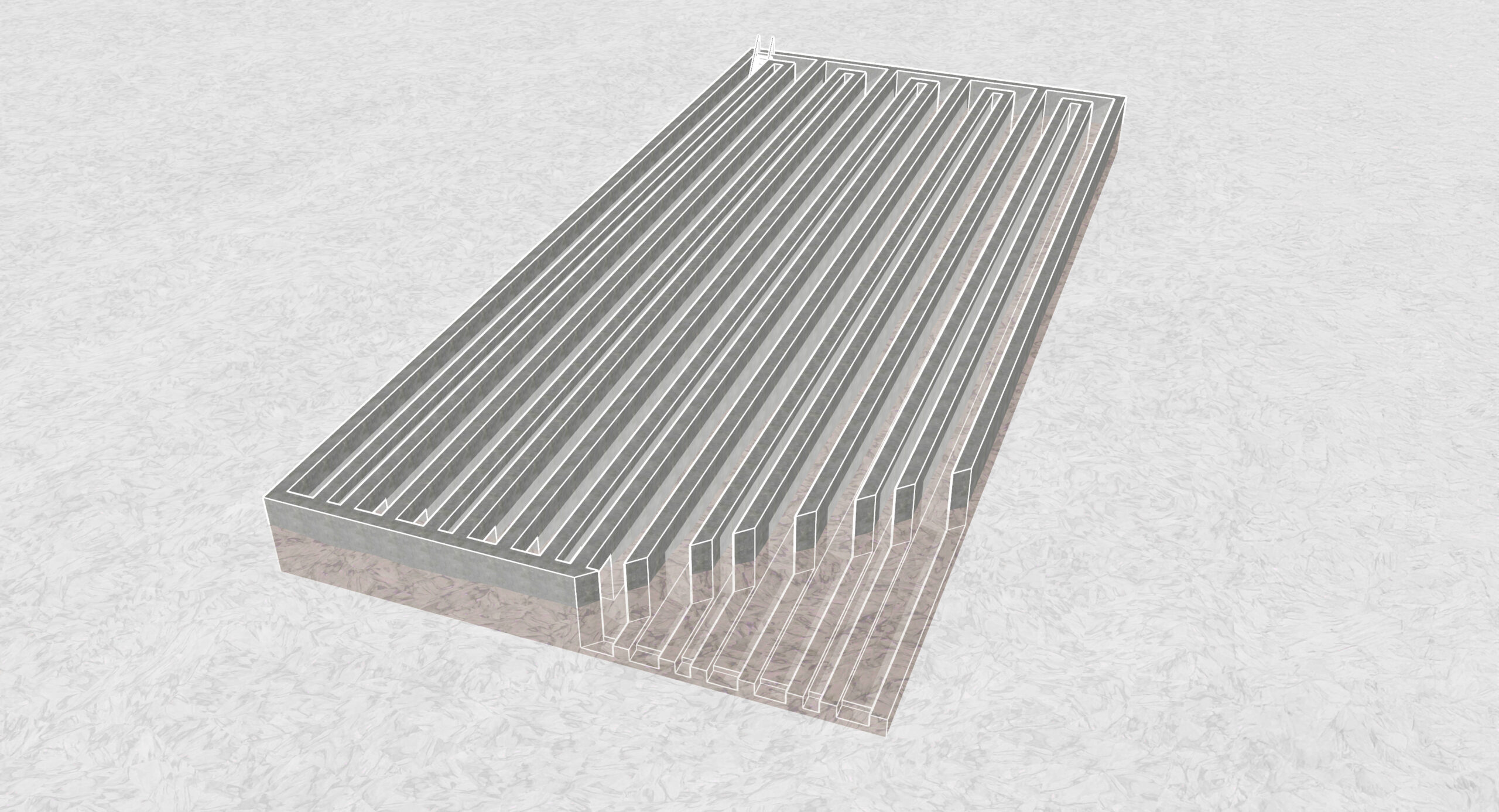
HEDWIGE is a manure cellar in the salt marshes. The aim of this architectural intervention is to change both the landscape and public perceptions of Hedwigepolder conflicts. HEDWIGE challenges binary oppositions between nature and agriculture, and between industrial and ecological growth. It situates their interconnected pasts and futures in the disregarded typology of the manure cellar. HEDWIGE is positioned on the site of a demolished farm. Its standard dairy farming proportions refer to post-war industrial growth. The concrete maze-like structure measures 50 by 25 meters, and is 3 meters deep. The top of the manure cellar is situated at the former ground level, as any other manure cellar would. As the polder has been excavated, this manure cellar lies bare in the landscape of Zeeland Flanders.
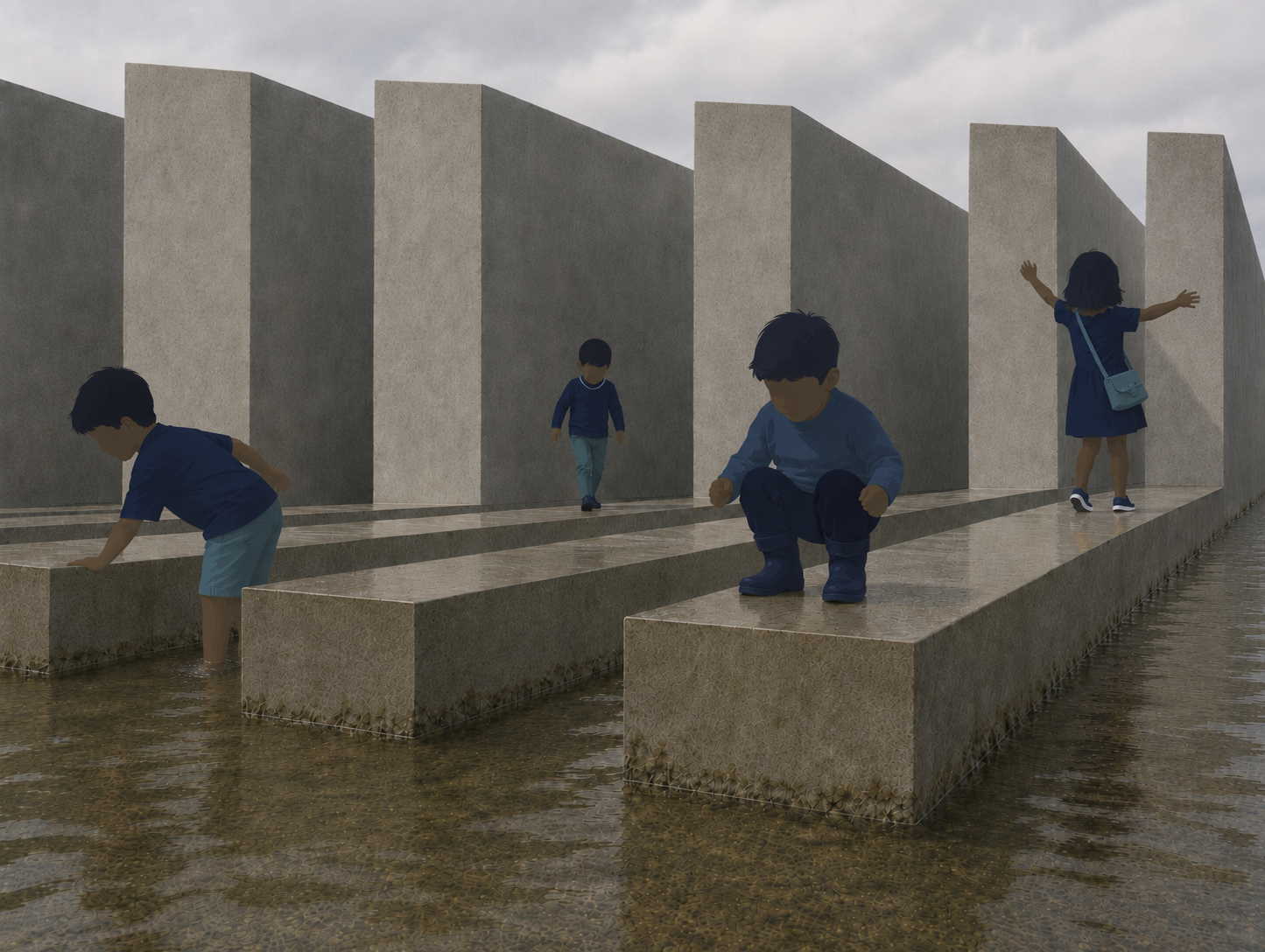
Through the cut, HEDWIGE shows how a single line, once drawn, develops its own ecological and spatial logic. The cut in the structure mirrors the opening in the dike. The vertical setback partially lowers the walls to create a tidal terrace. An enfilade lures silt and visitors even further in. These interventions enable Westerschelde water to periodically flow into the manure cellar. Depending on the tide, visitors can or cannot enter HEDWIGE. While the terrace offers them a wide view of the landscape, the passages turn people’s view inwards.
HEDWIGE demonstrates that boundaries between nature, agriculture and industry are porous. The architectural intervention reveals the complexity of the transformations in this politically charged area, as well as the global scale of industrial agriculture and its infrastructure. By cutting open an agricultural foundation and exposing it to tidal processes, HEDWIGE invites reflection on how concepts such as ‘identity’ and ‘nature’ are constructed within ruling economic logics.
HEDWIGE once served the growth of perennial ryegrass, and looks toward a future of saline grasslands. From the tidal terrace exposed by the cut, glimpses of global logistics come into view. Large container ships sail toward the port. Dredgers operate continuously to keep the Westerschelde navigable. In the flooded manure cellar, mud shrimps, a shore crab and the multi-coloured sea centipede have found their homes.
Pictures by Bart Houwers
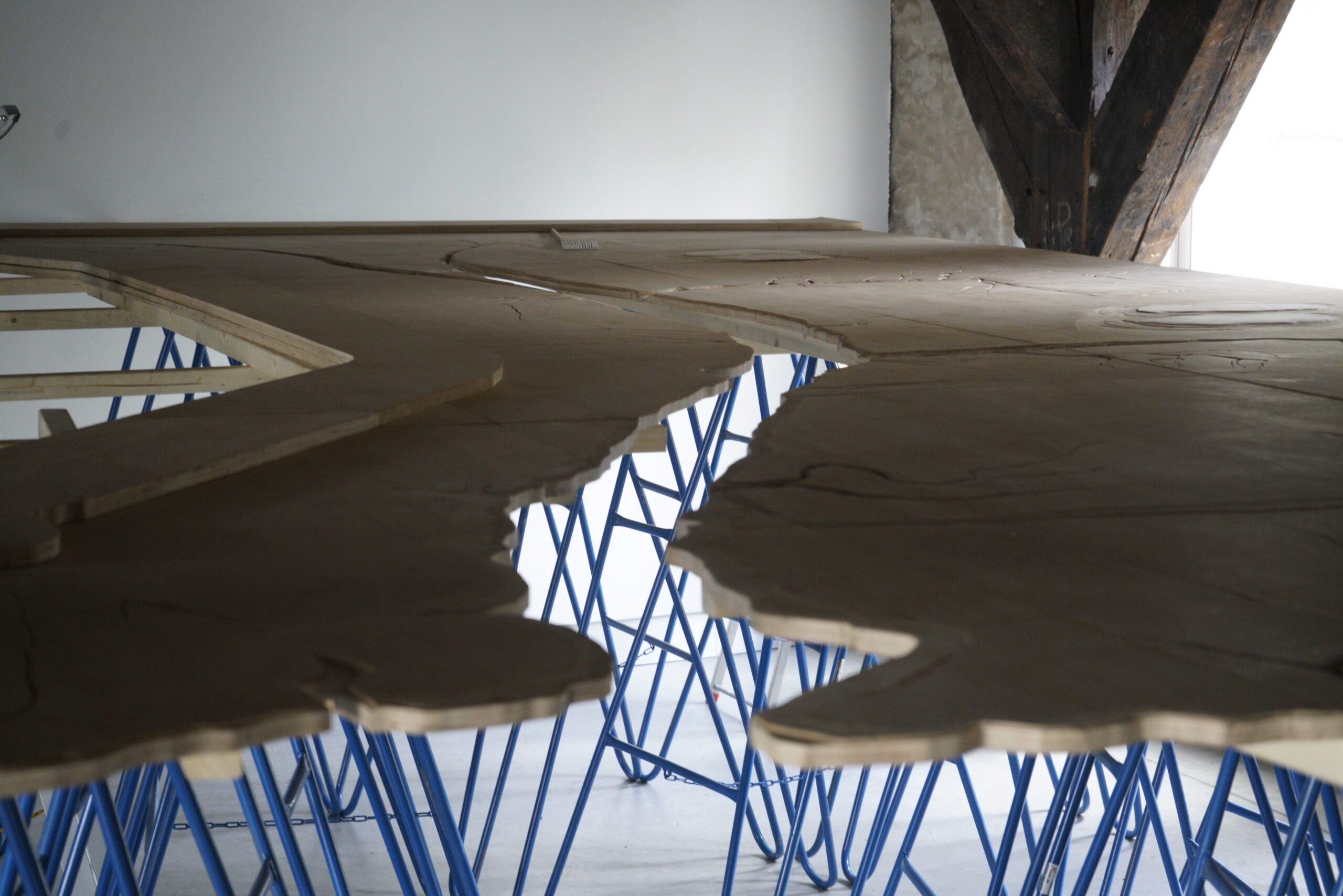
Materials: Scale models, drawings, maps and photographs
Hedwigepolder, 2026, Bart Houwers ©